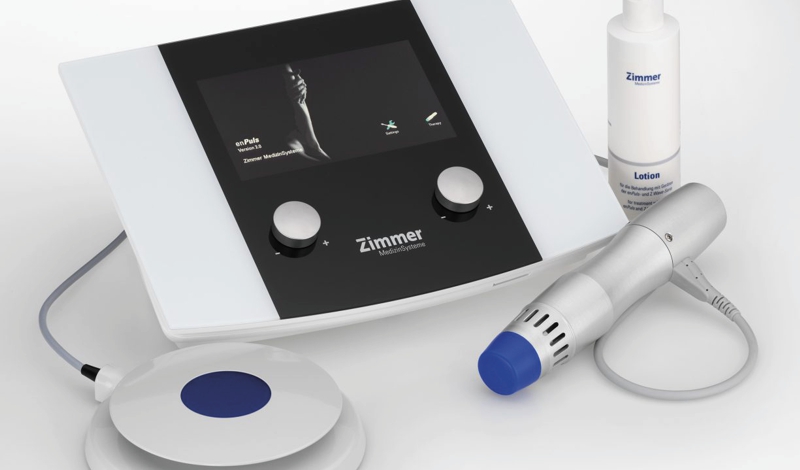
No, it’s not the next superhero movie, but it is something quite new and exciting.
We are pleased to reveal that we now have a revolutionary type of treatment called Radial Shockwave Therapy (RSWT) available at both of our clinics for new and existing clients.
It has been shown to be particularly successful in treating stubborn soft tissue conditions in the shoulder, hip, knee, foot or ankle, that are struggling to respond to conventional therapy.
What is it and how does it work? RSWT is a pioneering technology, recognised by NICE guidelines, and used all over the world with great success. It uses a non-invasive handheld applicator to send high-energy pulses into the affected area. This technique has been shown to have many benefits in chronic orthopaedic conditions by stimulating the body’s own natural healing mechanisms. These include: increasing blood circulation; breaking down scar tissue and calcification; increasing cell metabolism and increasing the ingrowth of new blood vessels.
You would need to have an assessment prior to starting your course of treatment to help to identify any possible underlying causes of the problem, as well as establish where to apply the shockwave. A care plan will then typically consist of a course of 3-5 weekly sessions, depending on how stubborn your condition is. Clinical studies have shown a success rate of more than 75% after 3-4 sessions, with the most benefit being felt up to 4 months after the last session, therefore it is essential that you complete your course of treatments to gain the most from it.
Treatments will typically take up to 20 minutes, with the actual shockwave therapy taking approximately 2000 pulses, or ten minutes. The remainder of the session will consist of other manual therapy techniques, advice or exercises as required. Once your course of treatment is complete, a follow-up consultation around 3-4 months later may be carried out, over the phone or in person if possible, to see how you are progressing.
There are very few side effects to the treatment, although some may feel short-term discomfort around the treatment area which should soon settle. Some people are not suitable for the therapy, and there are some recommendations prior to undertaking it, so please get in touch for more information.
Why not see what shockwave and chiropractic can do for you? For more information, please contact the clinic, or visit www.purehealthchiropractic.co.uk. We look forward to seeing you.
Chris Mallett
Pure Health Chiropractic