No two feet are the same – not even two feet on the same body.
Our feet are a continual work in progress. When we are born, our feet are only partially developed with only 22 recognizable bones. By the time we reach school, this number more than doubles to 45 individual bones – that’s a lot of changing in one little foot! These bones will continue to change over the next 15 years, some fusing together and others growing longer, until the age of about 18 when the bones reach a final count of 26. Accommodating little feet as they grow will ensure that they develop properly, that the muscles and tendons that support them develop well, and that no chronic problems will carry into adulthood. The most common cause of foot problems in children is shoes that are too small which can encourage bunion joints to develop. More than just discomfort, too-small shoes can give a child a lifetime of problems with their feet, legs, and back.
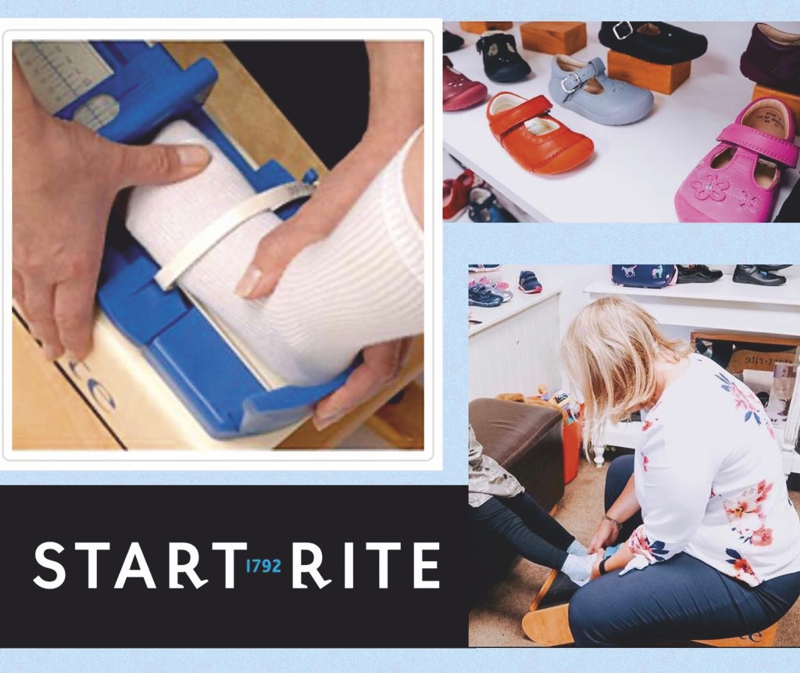
At Toggs and Cloggs we recommend that a child’s foot gets fitted by a trained shoe fitter at least every three to four months. A toddler’s foot can grow as much as a half-size in just two months, school-aged children can gain a half-size every four months. With such a wide variety of brands and shops to choose from, parents may feel they can judge the correct size. But there’s more to a good fit than a number. Start-rite offers a range of width fittings. The average width is F, which only covers 35 per cent of children, the rest vary from C to H.
The ideal shoe
The perfect shoe for your child’s foot is the one that was specifically selected to fit that foot. They should be fitted for length as well as width and shape, and toes should have plenty of room to wiggle around. A properly fitted shoe will be comfortable from the start and not require a period of ‘breaking in’.
Pre-walkers. Children do not need to wear shoes if they are not walking. Their feet only need to be kept warm, and any shoes should be completely flexible and shaped like the child’s foot.
Toddlers. Choose high-topped shoes with a tie closure to better fit round feet. Soles should be smooth to avoid tripping, and shoes should be lightweight so they don’t slow busy feet down. This helps with balance, stability, and gives the child confidence in their new-found skill.
Preschool and beyond. During these years, breathability and fit are the top priority. Children’s feet sweat a lot, and their shoes should accommodate this. Shoes should be flexible and not restrict foot movement, and be appropriate for the weather and activity.
As two mothers ourselves we understand that taking the children to buy new shoes can be a challenging experience! At Toggs and Cloggs, all of our staff are fully trained, not only to fit your baby’s or child’s shoes properly but also, to make it a fun experience for all concerned. Most importantly, we are confident that your child will leave us happy about wearing a correctly fitted pair of shoes!
Toggs and Cloggs