For a family with young children – or one with children who cannot afford to leave home – buying a house to accommodate everyone has perhaps become something of a challenge with ever-rising house prices. The elderly may perhaps be able to afford a larger property, but living on their own can lead to loneliness. Sharing a house – living in a multi-generational home – might offer the ideal way of satisfying the needs of both the young and the old. A multi-generational home certainly seems to be a solution which appears to work well for some families.
Multi-generational living means that no member of the family may ever feel alone. That is good news for older members of the family, of course, who might otherwise face days of solitude and isolation living on their own. By living together as part of the same extended family, however, it is that much easier to keep an eye on the older members, and having more elderly members of the family around on a more or less constant basis also has its benefits when it comes to helping out with childcare for example. There are also likely to be economic benefits too – relative savings may be made on the costs of council tax, utilities, and internet for one household instead of separate ones.
However, it is essential to consider the flip side though, before making any commitment – one of the immediate concerns is probably whether everyone is going to get on. In the first instance, there may be less reason for concern since all of the family are known to each other, but it is worth noting that this harmony may not continue as younger members grow up and the family dynamic steadily changes.
Another factor to consider is that if the home you buy is to be jointly owned by adult members of the multi-generational home, it is likely to be more challenging to find a competitive or favourable mortgage deal. This is more likely to be the case with family members over the age of 70 or 75, as lenders are often less keen to advance loans to this age group.
Having weighed up all the options, if you are ready to look to purchase a multi-generational home, then there are several key factors to take into account:
Size: the size of the home, of course, is critical – it needs to be big enough to accommodate everyone comfortably and provide enough living area to ensure plenty of personal space for each family member. It may be that a property with an annexe provides the best solution for this.
Transport Links: whatever type of property suits the needs of your extended family, it is worth giving serious attention to the accessibility of close transport links, such as bus routes. Youngsters (and not so young) need to get about – preferably, under their own steam. This not only encourages and promotes their own sense of independence but also relieves family ‘taxi-driver’ responsibilities!
Finances: serious conversations need to be held in advance about finances for the extended unit – how all the household bills, such as the mortgage, utilities, and food etc., are going to get paid.
Multi-generational living provides an alternative way of organising the family home for an increasing number of people – with benefits for each generation living under the same roof.
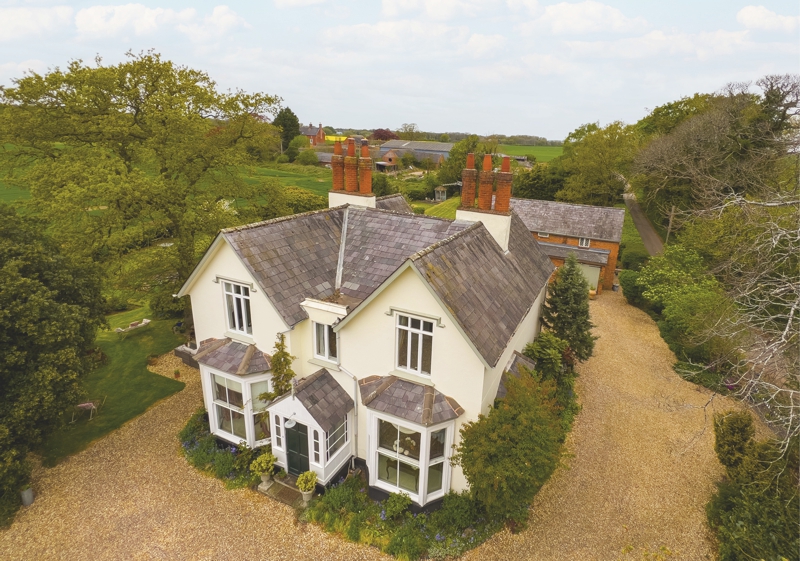
We have recently been instructed to market one such property for sale close to Edgmond; Caynton Cottage, which provides the perfect accommodation for this type of living, being a spacious five-bedroomed house (having four reception rooms) with the benefit of a detached one-bedroomed coach house annexe.
New properties are coming to the market all the time and if you would like advice on either selling or purchasing a property – or even renting a property for your larger family – please do contact us and we will be pleased to help.
by Elizabeth Fundell MNAEA
Davies, White & Perry
www.davieswhiteperry.co.uk/property/caynton-cottage-caynton-tf10-8ne/