We often think about the cost of rising energy bills, food prices, or fuel, but have you ever considered the hidden cost of poor sleep?
Sleep isn’t simply a period of rest. It’s one of the most important investments we can make in our health and wellbeing. While we sleep, our bodies repair tissues, strengthen the immune system, regulate hormones, consolidate memories, and prepare us for the day ahead. When we consistently miss out on good-quality sleep, the effects can quietly ripple through almost every aspect of our lives.
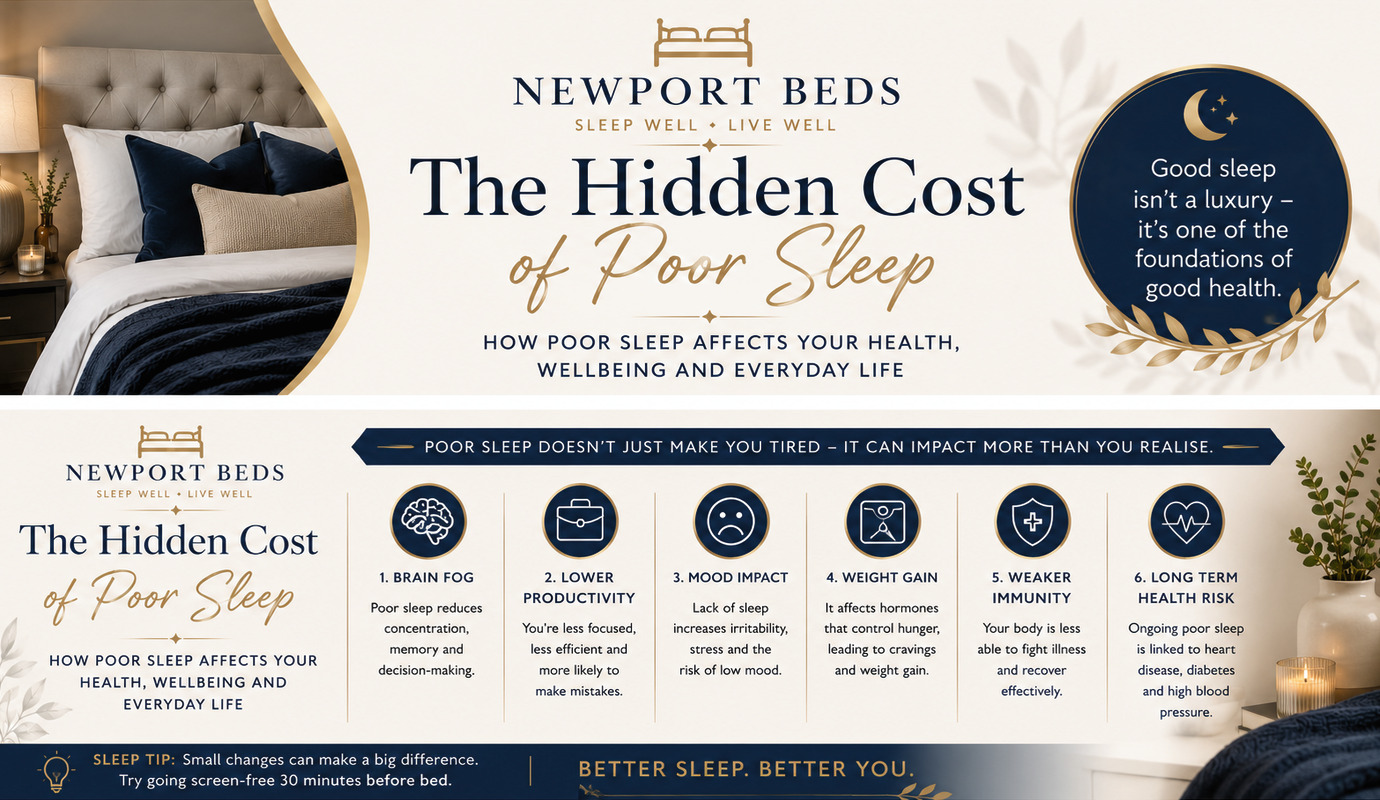
One of the first things many people notice is reduced concentration. Tasks that would normally feel straightforward suddenly require more effort, memory becomes less reliable, and decision-making can feel more difficult. Whether you’re working, studying, or simply managing everyday life, poor sleep can affect your performance more than you realise.
Our emotional wellbeing is also closely linked to sleep. After a restless night, we are often less patient, more reactive, and find it harder to cope with everyday stresses. Relationships can suffer, not because we don’t care, but because we’re simply running on empty. Sleep gives both the body and the mind an opportunity to reset.
Poor sleep can also influence our physical health. Research has shown that ongoing sleep deprivation may weaken the immune system, increase inflammation, and affect the hormones that regulate hunger and fullness. This can lead to increased cravings for sugary or high-calorie foods, making it more difficult to maintain a healthy lifestyle. Over time, consistently poor sleep has also been associated with an increased risk of a number of long-term health conditions.
At Newport Beds, we are often reminded that many people accept poor sleep as simply part of getting older or living a busy life. While many factors influence sleep, one of the most overlooked is the environment we sleep in.
We spend around a third of our lives in bed, yet many people continue sleeping on a mattress that is no longer providing the comfort or support they need. An ageing mattress may contribute to aches and pains, disturbed sleep, and frequent waking during the night. Creating a calm, comfortable sleep environment and ensuring your mattress is right for you can make a significant difference to the quality of your sleep.
If you’re looking to improve your sleep, start with a few simple changes:
Aim to go to bed and wake up at roughly the same time each day.
Keep your bedroom cool, dark, and free from unnecessary distractions.
Consider whether your mattress and pillows are still offering the comfort and support your body needs.
Good sleep isn’t a luxury. It’s one of the foundations of good health. When we sleep well, we think more clearly, feel more resilient, recover more effectively, and enjoy a better quality of life.
Perhaps the real question isn’t, ‘Can I afford to invest in better sleep?’ It’s, ‘Can I afford not to?’
Sleep tip of the month
Before reaching for another cup of coffee to fight tiredness, ask yourself what your sleep is trying to tell you. Improving the quality of your sleep may be one of the most powerful things you can do for your health.
Carpet Loom and Newport Beds