Heatwaves – a growing challenge for care homes
 nova
26 July 2026
For generations, we British have loved to complain about the weather. Too cold, too wet, too windy, or not enough sunshine. But over the past few years, something has changed. Heatwaves are no longer unusual events that arrive once every decade – they are becoming an expected part of every summer. June has already brought temperatures that many of us would once have associated with holidays in Southern Europe, and meteorologists are warning that July could bring more of the same.
Whilst many of us enjoy a spell of sunshine, the reality is that excessive heat can be dangerous for older people. As we get older, our bodies simply don’t cope with heat as efficiently as they once did. We don’t always recognise when we’re becoming dehydrated, and many medications or existing health conditions can make matters worse. Something as simple as not drinking enough over the course of a hot afternoon can quickly lead to confusion, dizziness, urinary infections, or an increased risk of falls. For someone living with dementia, even recognising that they are becoming too hot or remembering to ask for a drink may not be straightforward.
One of the things I often say is that caring is about anticipating problems before they happen. Heatwaves are a good example of that. Waiting until someone becomes unwell isn’t good enough – we need to prevent the problem in the first place.
All care homes are regulated, and rightly so. One of our fundamental responsibilities is to keep residents safe. Years ago, that might have meant concentrating on slips, trips, medication, or winter illnesses. Today, climate change is adding something new to that list!
The truth is that many care homes occupy wonderful old buildings full of character, but they were never designed for prolonged periods of temperatures reaching thirty degrees or more. They were built to keep the warmth in during cold winters – not to keep the heat out during increasingly hot summers.
I wonder whether, in years to come, air conditioning will be viewed in the same way as central heating is today – not as a luxury, but simply as an essential part of providing good care.
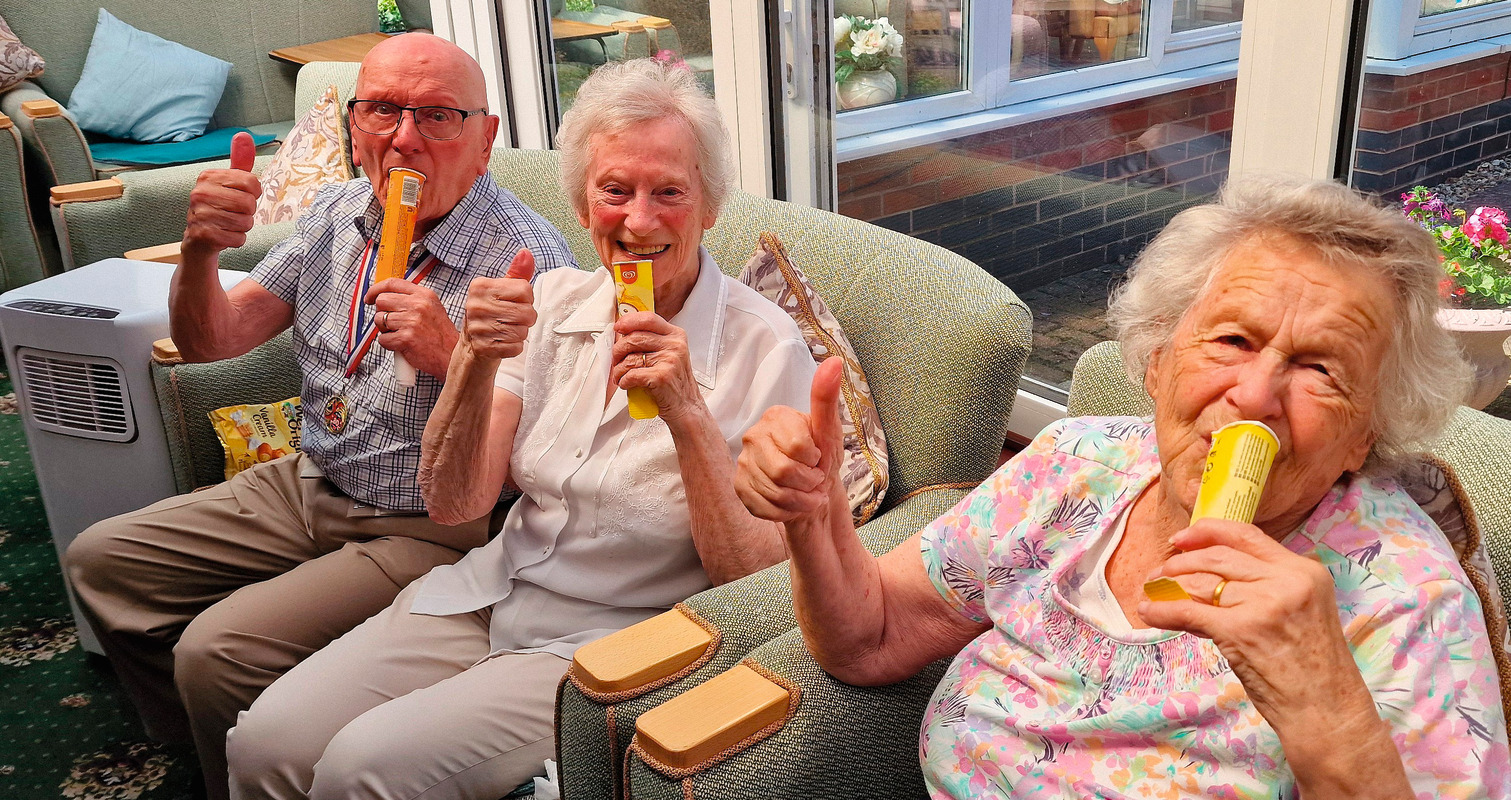
At Sambrook House, we’re fortunate to have a fixed air-conditioning unit in our conservatory, together with several portable units that help us keep our communal areas comfortable. During hot weather, our staff work incredibly hard behind the scenes, closing curtains before the sun reaches the windows, managing ventilation carefully, encouraging everyone to drink little and often, providing fresh fruit, cold drinks and, of course, plenty of ice-creams! Activities are adapted, the pace of the day slows a little, and everyone keeps a close eye on residents who may be more vulnerable to the heat.
The advice for everyone is actually quite simple. Drink regularly – even if you don’t feel thirsty. Wear light clothing, keep curtains closed in sunny rooms, avoid being outside during the hottest part of the day, and make use of the coolest areas of the home. If you have an elderly relative or neighbour living alone, take a few minutes to give them a ring or call in and check on them – succumbing to heat exhaustion can be very rapid.
Working in care has taught me that every season brings its own challenges: winter brings flu and icy pavements, spring brings allergies, autumn brings coughs and colds, and increasingly summer brings heatwaves. Our job as care providers is to prepare, adapt, and continue providing the safe, compassionate care our residents deserve. Preparing for a warmer climate is simply another chapter in the ever-evolving story.
At Sambrook House, we will continue to invest, adapt, and innovate to ensure our residents remain safe, comfortable, and able to enjoy the best possible quality of life – whatever the thermometer happens to say.
Enjoy the Mediterranean summer, and stay safe.
by Neil Robson, Director
Sambrook House Residential Care Home