Snowing me, snowing you
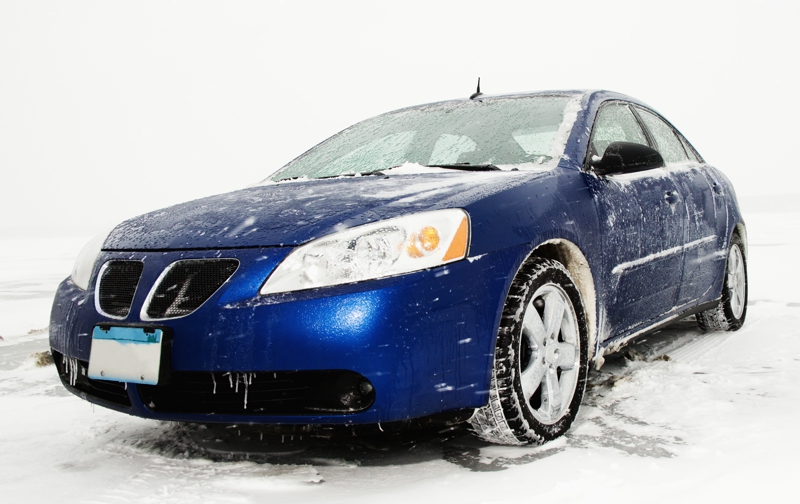
Did you get caught out by the driving conditions we experienced during the December snowy spell?
The Institute of Advanced Motorists’ chief examiner, Peter Rodger is offering riders and drivers further advice on travelling in snow. And with the unpredictability of our weather it could come in handy at any time.
If you have to travel in bad weather plan your journey thoroughly. Think about where you are going and what it will be like all the way along the journey. If you can, avoid travelling on less used roads or country lanes as these are less likely to be gritted.
Before setting off, clear all your windows and mirrors fully. Clear off snow piled on the roof of your car and the bonnet too, as it can fall or blow on to the windscreen. Don’t leave anything obscured.
Start your car gently from stationary and avoid high revs. If road conditions are extremely icy and you drive a manual car you should move off in a higher gear rather than first gear. You should stay in a higher gear to avoid wheel spin.
It’s important you get your speed right when travelling in snow. Never drive too fast that you risk losing control, and don’t drive so slowly that you risk losing momentum for getting up a slope.
At the very least, double your stopping distance from the vehicle in front of you – ideally lengthen it much more than this. This will give you more time to slow down without relying on your brakes.
Make sure you slow down sufficiently before reaching a bend so you have enough time to react to any hazards that appear as you go round it – and so you do not skid. You should have finished slowing down before you start to turn the steering wheel.
If you break down or have to pull over on a motorway or dual carriageway, you should leave your vehicle and stand to the safe side of it when waiting for help.
Many of the problems associated with travel during snow can be avoided by planning in advance. People routinely travel with only the minimum of safety equipment, without realising their journey could be a lot longer than expected.
At the very least you should have a shovel, torch, blanket, jump leads and tow rope. You should ensure your mobile phone is fully charged, and the number of your recovery organisation is saved into it. And don’t set out without knowing the location of petrol stations on your way.
This all might sound obvious, but too many of us forget to do any of this. Don’t be one of the ill-prepared, listen to the weather forecast for the whole length of a winter journey to help you prepare for it.
Group Economy
A group of bike enthusiasts recently set themselves a challenge of achieving the highest possible fuel economy figure from a motorbike – with the winner coming away with an impressive 122mpg.
The riders are part of the Institute of Advanced Motorists’ London Advanced Motorcyclists group, and the annual economy run is titled What Will It Do Mister?
Norton Hawes, group chairman of the London Advanced Motorcyclists explained, “As riders we always want to set challenges, and children and adults alike are always asking ‘How fast will it go?’ and so on. We turned this around and decided to come up with a challenge which was about economy, not speed.”
The idea was the brainchild of long-standing member Andrew Craster, and the run has been staged every year since 2009. The group has some strict guidelines about how the economy run is conducted – everyone must ride to IAM test standards, must not impede other road users and keep to all road safety rules and guidelines.
The route set by London Advanced Motorcyclists took in nearly 60 miles of varied conditions including A and B roads, busy town centres and rural sections.
The group divided up participants into four categories depending on the stated power output of each bike. There was a varied collection of machinery taking part in the challenge including Honda C90s, BMW R1200GSs, Yamaha RX100s, Triumph Tiger 1050s and a Ducati Multistrada.
The winning rider was the group’s observer Peter Gibbons, who achieved 122.9mpg on his Honda CG125. Runner-up was Peter Raynham on a Honda NC750X with 101.8mpg, with Dave Wilkins on a Honda C90 taking the final podium spot with 98.9mpg. Next up were Alice Dryden on a Honda Integra with 90.2mpg and Eddie Wright on a Yamaha RX100 who achieved 90.1mpg.
Norton said, “The key to economical riding is staying smooth and avoiding hard acceleration or braking. Also planning ahead is important – look far enough ahead to anticipate changing road conditions and look for gaps in the traffic to ease gently into.”
For more information on advanced driving and motorbike riding, visit the IAM website iam.org.uk which has links to local groups. •