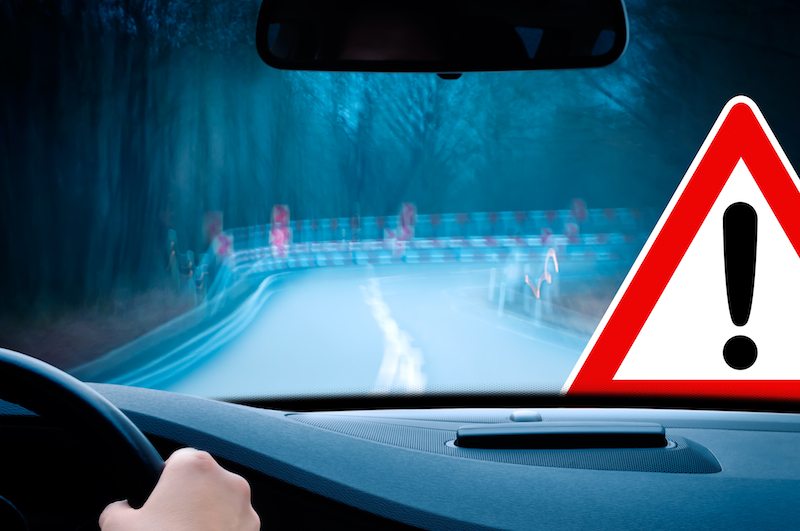
Responding to emergency vehicles.
Whether you’re driving to work, to the shops or to visit a friend, the reality is, we often come into contact with the emergency services. You’ll suddenly hear the faint sounds of sirens and spot the flashing lights out of the corner of your eye. In your rear view mirror you can see an emergency service vehicle approaching. What do you do next?
In an IAM survey, 35% admitted they didn’t know the rules on how to deal with an approaching emergency service vehicle. Here’s some advice on how to avoid making any mistakes.
The first thing to do is use your mirrors to look at the space you have around your vehicle. This will help you to work out the best action to take. Pull over to your left as soon as you can safely do so to give the emergency service vehicle(s) enough room to pass with ease. Use your indicators to warn the road users around you as long as it won’t confuse them.
In the rush of the emergency services we can often overlook that pulling into a bus lane, a yellow box or over a stop line at a red light could mean a Penalty Charge Notice (PCN) so don’t risk it. The emergency service vehicle drivers are all specially trained for dealing with emergencies. They’ll know how best to overcome a situation to get to their emergency as quickly as possible. Don’t pull over on kerbs, verges and pavements. You could put pedestrians or other road users at risk.
If there’s one emergency service vehicle approaching, it is likely that there will be more to follow – so take your time to check before moving off. Remember, emergency service vehicles need to get to the emergency as quickly and as safely as possible. Don’t take any risks to help them progress to their destination.
What to do following an accident
The reality is nobody wants to think about having a car accident. It’s not a nice thought, but it’s important to be prepared in case you are involved in one. Knowing what you must do and taking simple precautions can make things easier afterwards. If you do find yourself in this position, think about the following:
- If you have the option, stop where it is safe
- If it’s appropriate, turn the engine off and put your hazard lights on.
- The initial feeling after an accident can leave you feeling in a state of panic and worry. Make sure you take a couple of minutes to gather your thoughts.
- Keep yourself safe and check that any other passengers involved are safe and well too.
- Stay calm. You will need to swap some details with the other driver(s), unless that isn’t possible because of injury or because they drive off. If you don’t, you must report the accident to the police within 24 hours.
- Be sure to exchange details. Give your name address, registration number and the name and address of the owner of the vehicle. You should get these details from the other driver(s)
- If someone is injured, ensure you exchange insurance details
- Get any witness contact details and take photos of the scene and vehicle damage. This may come in useful later on when dealing with your insurers
- Make sure you note carefully how many people are in the other vehicle(s) involved
- Report the incident to your insurance company as soon as you can
Young driver deaths – it’s not all about the driver
The number of drivers aged 17-24 killed in an accident has decreased by 10 per cent since 2010. In the same time frame, the number of 17-24 year old passengers killed in a car with a young driver (aged 17-24) has decreased by 24 per cent. The difference could be due to the general improvement in safety on our roads, fewer young people passing the test, ongoing campaigns and enforcement and the recession.
Younger drivers are more likely to travel with passengers of a similar age but the risk goes up with every extra passenger. A study from the USA showed that a young driver’s chances of being killed went up 44% with one passenger, 90% with two and 300% with three or more.
In 2012, 133 drivers aged 17-24 were killed alongside 71 young passengers. The previous year 148 drivers aged 17-24 were killed as well as 93 young passengers.
New drivers are far more likely to cause their passengers’ death than any other age group and they and their passengers have far more life changing catastrophic crashes with lifelong injuries. Parents and young people should follow the IAM’s tips for young passengers to maximise the chances of survival:
- More passengers equals more risk so don’t overload the car as it will handle differently and the driver may not know how to deal with that
- Don’t distract the driver by trying to show him or her stuff on your phone
- Don’t give in to peer pressure – if others are being stupid don’t get involved
- Never get in a car with a young driver who has been drinking
- Agree with parents that you can call them up or they will pay for a taxi if you have worries
- about your lift
- Risk is highest at night and on country roads – make sure your mate knows where they are going and has put in the hours learning how to cope with a wide variety of roads
For more information on advanced driving and motorbike riding, visit the IAM website iam.org.uk which has links to local groups.
Article based on information supplied by IAM