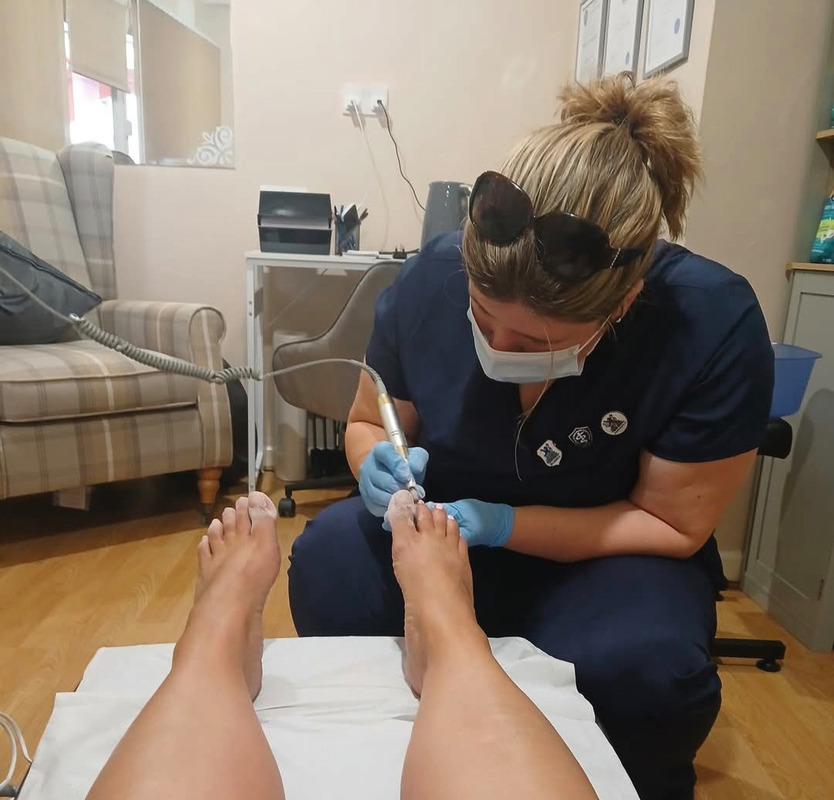
I am often asked what the difference between a Podiatrist and a Chiropodist is. In the 1990s the term Podiatry/Podiatrist was protected and only people who went to an approved training school and who were educated to a degree level or equivalent could be called Podiatrists. Podiatrists who practise also need to be HCPC registered. This is imperative, in a nutshell, it means that we undergo rigorous checks with regard to our practice, record keeping and the postgraduate training – we continue to learn and improve. Should you have a complaint that cannot be resolved, as a patient you can contact the HCPC and your complaint will be heard and action taken. Should you have a Health Insurance policy, most will require HCPC registration.
Some Podiatrists will still use the name Chiropodist and use it for advertising purposes and it is a most commonly known name. However, the name Chiropodist is not protected and the title can be used by those not truly qualified to use it.
What do Podiatrists learn?
Podiatrists are taught a comprehensive medical knowledge. They have a working knowledge of the anatomy of the feet, legs and most of the body, both internal and external. Podiatrists understand what happens during an injury. They know medicines and what they are used for. They are basically specialists of the feet and some even go on to become specialist foot surgeons.
Who will you choose?
When you are looking for someone to treat your own or your loved one’s feet, please consider the following points:
- What are their qualifications?
- Do they have insurance?
- Are they governed by a professional body?
- Do they have a clinic address that you can refer to should you have a problem?
- Do they have a landline or just a mobile number?
- Are they professional in their approach?
If you are unsure please ask, and consider if the person you use is the right person for the job. •