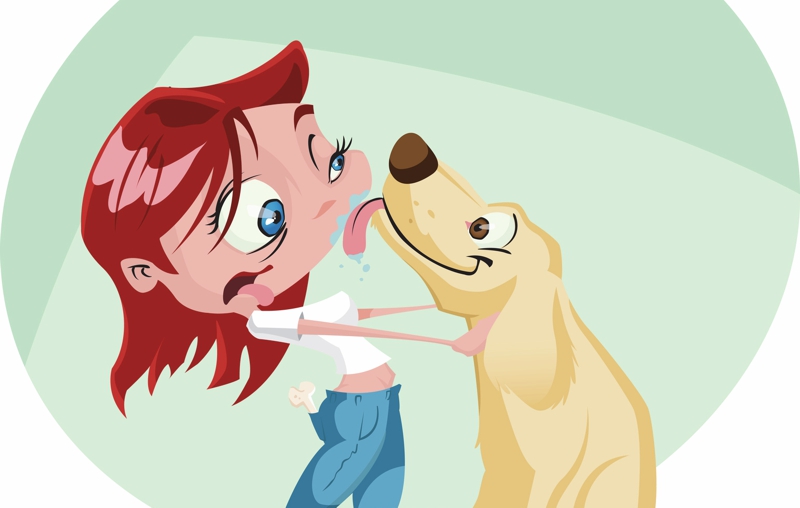
The phrase dog days refers to the sultry days of summer. In the northern hemisphere, the dog days of summer are most commonly experienced in the months of July and August.
Life can be so hard and unpleasant – I’ve got to do the shopping, cook a meal, do the housework – it’s a dog’s life! A dog’s life was first recorded in the sixteenth century and seems to have remained in the language with the sense of a life of misery, or of miserable subservience.
Is a dog’s life really so bad after all? The answer it seems, depends on whether we are younger or older than 50. Those of us over 50 seem to accept the fact that living a dog’s life means that things are hard; but in the under 50 set, the idea is that dogs have it easy, and so it’s a dog’s life equates to how cushy life is!
It certainly seems that the phrase has become more ambiguous than it was. Most of our expressions that include dog are old enough to be based in times when dogs were not cosseted, but were kept as watchdogs or hunting animals, not as pets. They often weren’t allowed in the house, but were kept in kennels, fed scraps, worked hard, and often died young. So going to the dogs, dog tired, dog’s dinner, dogsbody, dog eat dog, and a dog’s life all refer to a life that is best to be avoided.
Lots of today’s dogs spend more time cooped up at home whilst their owners are out at work. As the owners leave for the day perhaps they say, “We’re going out – relax, have a kip, chew a bone, we’ll be back soon”. No wonder today’s dog’s life is perceived as a life of Riley!
A dog’s easy life is often portrayed with cartoon characters such as Pluto, Goofy, Scooby-Doo and Deputy Dawg. Most famous in the 60s, Deputy Dawg sometimes colluded with the varmints Muskie Muskrat and Moley Mole and he only put them behind bars when he needed to please the Sheriff!
Perhaps Deputy Dawg’s ultimate loyalty to his Sheriff stems from man’s best friend, which is a phrase referring to domestic dogs, highlighting their close relations, loyalty, and companionship with humans. This phrase comes from a 19th century court case when a farmer sued for damages after his dog, Old Drum, had been shot and killed.
This faithful loyalty was also evident with the Italian street dog Fido (faithful, from Latin fidus). In 1941 Carlo Soriani found him lying injured in a roadside ditch and nursed him back to health. For two years afterwards Fido followed Soriani to the bus stop when he went to work and returned to the bus stop in the evening when he came home. Soriani was killed when his workplace was bombed during the war and because Fido did not see him get off the bus that night, Fido returned to the bus stop every evening for another 14 years until he died. Time magazine wrote an article about Fido in 1957 and the Italians erected a statue in his honour.
Hairdressing is a big part of Newport’s High Street society and Head Quarters staff appreciate that faithful cuts both ways. Donna and her Deputies always support each other and although they have never followed their clients to the bus stop, they have been known to visit their elderly clients at home if they are unable to make it to the salon. •