It has been three years since the European Commission introduced new regulations on vacuum cleaners, designed to be greener to the environment.
The changes meant that you could only buy a cleaner with a maximum input power of 1600 watts and that consumed less than 62 kWh/year. They also introduced a minimum efficiency for picking up dust on hard floors and carpets.
This drove the manufacturers to design far more efficient cleaners.
The cleaners were given an energy rating from A to G. Amid the confusion was the argument that having half the power would take you twice as long to clean, which was not what people wanted. You want to do the cleaning in the minimum amount of time possible. Although there was a bit of a rush by customers buying older, higher wattage cleaners, the increased efficiency enforced by the European Commission meant that new cleaners would save money on electricity bills.
From the beginning of September there are new supplemental regulations for vacuum cleaners.
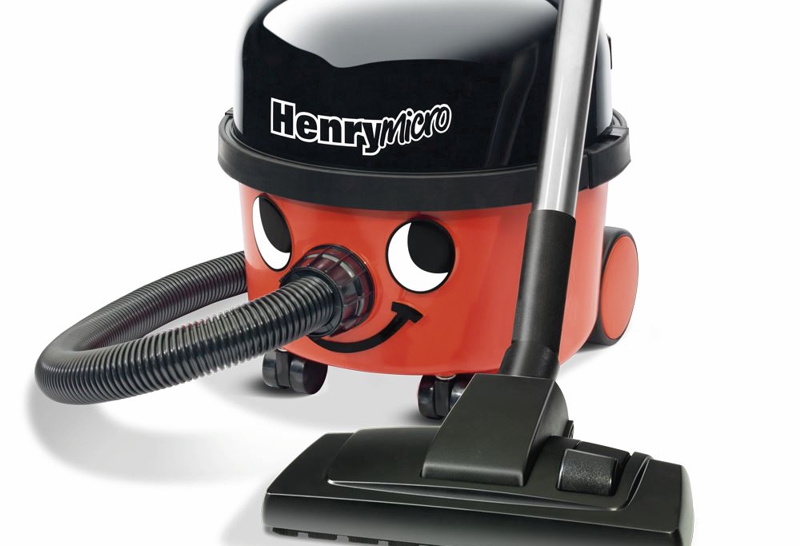
Again, the maximum input power has been reduced, this time to 900W. Although this may be of concern, the new cleaners really are far more efficient. Manufacturers have already been selling cleaners that use less power than this. For example, the Henry cleaner we sell at Tylers is rated at 620W. The best way to compare cleaner suction is by AirWatts, with manufacturers often quoting the equivalent suction to older 2400W motors. The new energy labels show efficiency ratings from A+++ to D (with ratings E to G being dropped), and ratings for hard floors and carpets. Not only must cleaners be less than 42 kWh/year, but their ability to pick up dust on carpets and hard floors has been increased.
In addition to the lower power, the motor must last at least 500 hours. There is a very welcome cap on noise levels of 80 dB(A), so your new cleaner should be quieter (at about the same noise level as a washing machine on spin).
Picking up the dust with good suction is only part of the solution.
Cleaners need to retain the dust, which is governed by the bag and filters, or the cyclones for bagless cleaners. New cleaners must not re-emit more than 1% of dust.
These new regulations apply to corded cleaners, but not to floor polishers, wet and dry cleaners, robotic vacuums, handheld or battery operated cleaners.
To keep your cleaner working optimally, you should empty it regularly, replacing the bags and filters as directed by the manufacturer. Using the correct tool can make a big difference on the level of suction for the task you are doing. For example, use a brush bar to agitate dirt on carpets. Remember to clean the brush bar as they tend to get clogged up with hairs.
Visit us at Tylers for a selection of bagged and bagless, corded and cordless cleaners. •