If you take your car to a garage for a service or repair, you rightly expect that it will be attended to by someone who is competent and qualified, and who will lavish care on your vehicle.
If you use any professional care service, you should equally be assured that the person(s) delivering care is appropriately trained, qualified, professional, and caring.
This month, I thought it would be good to talk about the training and qualifications for care staff.
Qualified to care
Back in 2015, in order to raise the overall standard of care in the UK, the then Government introduced a minimum training standard for care, called The Care Certificate. It comprised 15 standards, both theoretical and practical, that had to be attained by someone working as a carer. Care companies not only have to train their staff to this minimum standard, but all of their staff must also undertake regular competency tests and annual training updates.
Training covers a multitude of areas and includes topics like: ‘moving and handling’, ‘food hygiene’, ‘medication’, ‘infection control’, ‘mental capacity act’, ‘safeguarding and whistleblowing’, ‘fire safety’, ‘person-centred care’, ‘communication’, as well as more specialist areas where needed such as ‘epilepsy’, ‘Parkinson’s Disease’, ‘catheter care’, ‘diabetes’ etc. It is important that carers are trained to notice signs of health deterioration as well as be able to deliver practical personal care. It provides a comprehensive grounding and puts people on a pathway to gaining further professional qualifications.
But we humans are much more complicated than a car in for a service, and delivering good care has many other facets, such as talking and listening, having empathy, maintaining the individual’s independence and dignity, and always being respectful. It is about ensuring that the care being offered is in line with the person’s needs and expectations.
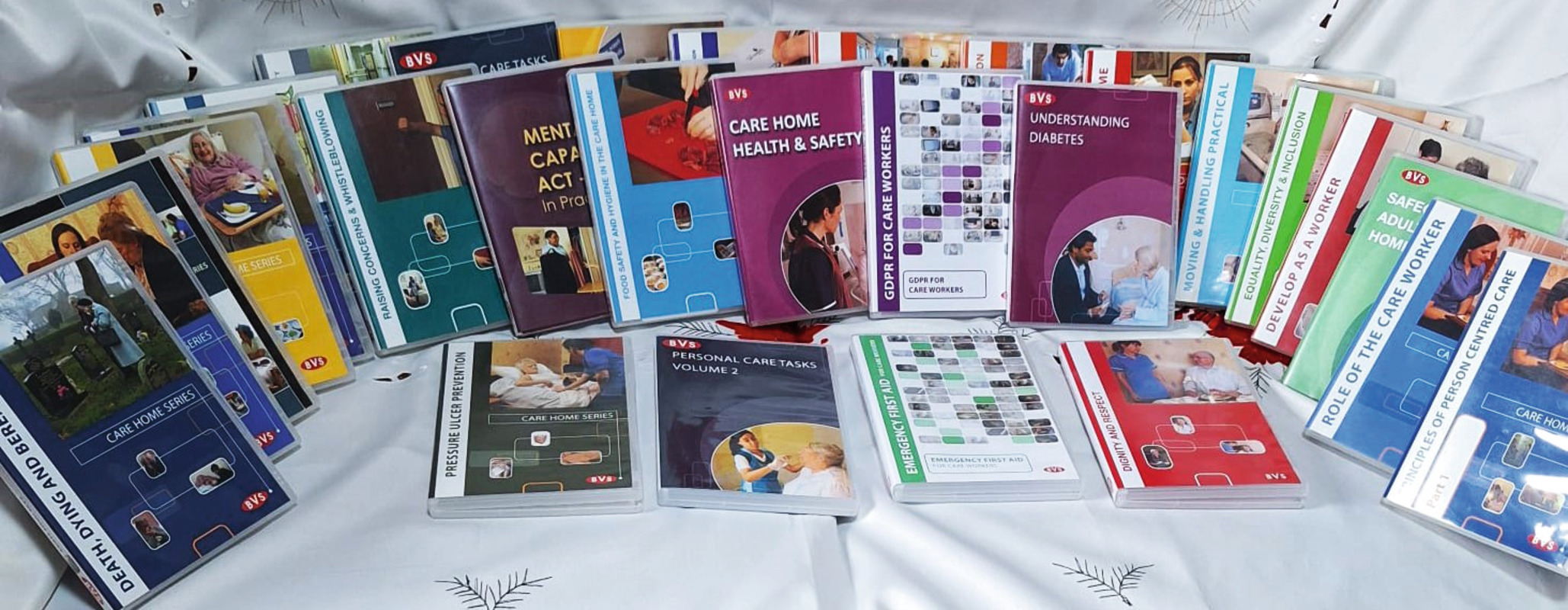
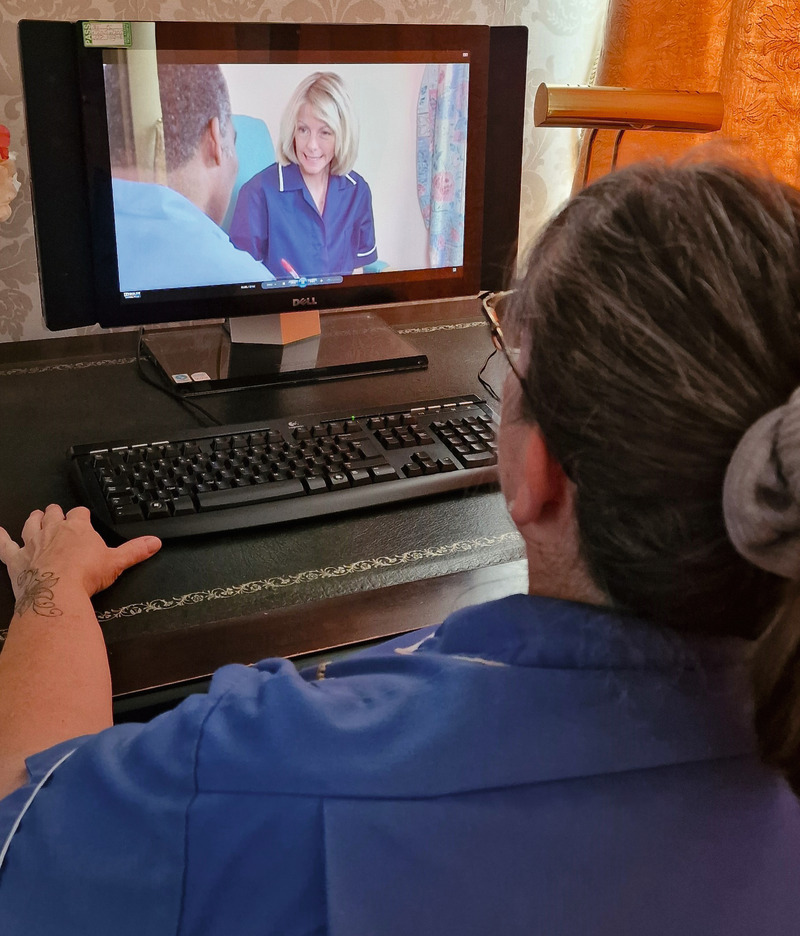
At Sambrook House, all new recruits (no matter what their professional qualifications and experience) are asked to complete, as part of their induction, a large set of BVS videos [pictured] and associated question sheets that form the basis of the Care Certificate.
On successful completion, our new recruits are placed on shadow shifts where they are supernumerary, giving them time to learn our processes and meet our clients, whilst working alongside our staff. Only once deemed competent will they be given a rota and join as an active member of the care team. Further training comes later as part of continued professional development, things like medication administration.
There are also professional qualifications (alluded to earlier) that carers can gain, and we encourage and support all our team to attain at least level 2. These are: NVQ/Diploma Level 2 and Level 3 in Health and Social Care. The majority of our carers have achieved their level 3.
We must not underestimate how difficult and complicated it is to deliver effective, sympathetic, empathetic care to different people throughout the day – people are all individuals with different needs and expectations. I have often said that carers are born, not made, because it takes a very special person to devote their life and career to caring for society’s most vulnerable, but if that is you, then the personal rewards are amazing!
So, should you be able to have confidence in your carer’s ability and training – absolutely!
Becoming a carer is a great career where you can make a real, positive difference to the lives of others!
by Neil Robson, Director
Sambrook House Residential Care Home