This is officially the first month of spring.
The early bulbs are over and it is now time to divide and move snowdrops. They move best while in the green, in other words while they still have leaves. Allow other bulbs to die down naturally as their leaves feed the bulb ready for flowering next year.
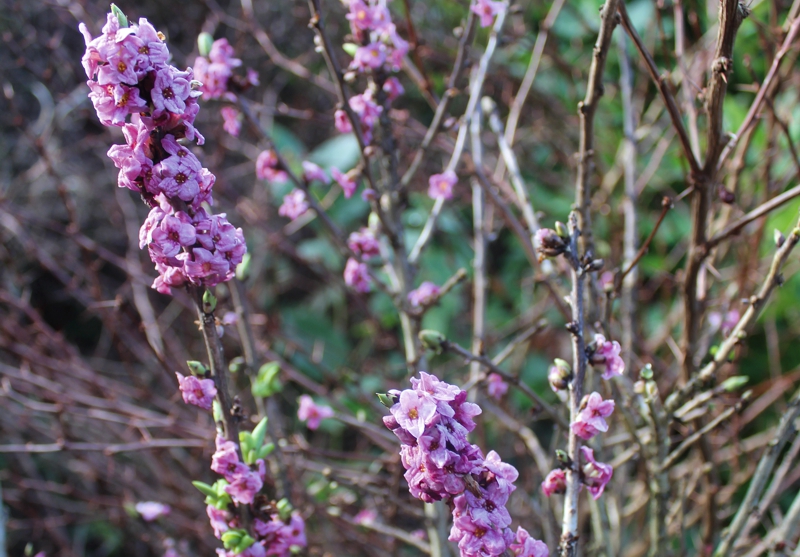
The daphnes should be out during this month, giving a display of small pale pink flowers. They are not the showiest of flowers but their perfume is excellent and is produced on all but the coldest days.
If you have light soil it should be possible to get on with many jobs in the garden. However, do not be tempted to walk on soil which is sodden. This is likely to be the case if you are on heavy soil as we are at the nursery; it would simply compact the soil and reduce the air and water available to the plants in the summer. This in turn means they will struggle to flower or fruit as they should and as you would wish. All pruning of soft fruit such as gooseberries and currants should be finished by now and they can be fed and mulched to make life easier when picking their fruit in the summer.
After a winter such as the last one, with all the winds and rain, tree stakes etc may be broken but still standing or loose having been rocked by the winds. Loose stakes should be removed and reinserted so they are firm and hold the tree correctly during the summer.
With lawns, if we have a dry warm spell – and we can hope – it is time to repair any winter damage. If there are worn or bare patches, seed can be sown and gently raked in, areas of moss can be raked out, and again seed sown to repair any damage. If you are feeling energetic, now is the time to thoroughly rake the whole lawn to remove any thatch which has built up. This will improve the lawn and should make mowing easier in the summer.
Robert Hudson
Lilyhurst Plant Centre