I was reminded this week about what is important when people are looking for a care home, either for themselves or on behalf of loved ones. I had a lady visit, without an appointment (which I believe is the best way to see a care home), and she talked about her parent becoming increasingly frail and isolated at home. This lady asked some very insightful questions, which has prompted me to write about things to look for in a care establishment.
Last month I broached the important subject of ‘respite care’ and how it can be a great ‘holiday’ for all parties. It is a very important topic as we enter the big holiday season for families. So this month I would like to present some ideas of what to look for when choosing a residential home.
Firstly, as long as the reason for entering a home isn’t an emergency, then most homes will accept a booking of a month so that you can try it out. I always recommend a month because it is enough time to see how the organisation ticks, make friends, and assess whether the place is for you, but not so long that it feels like forever! The first couple of weeks are the hardest, when you are finding your feet, but by week three most people start to relax and enjoy what the home has to offer.
You will need to like your surroundings, is it nicely decorated, well equipped to meet my needs, are the bathing facilities nice (we installed a jacuzzi bath last year and it is a real hit), are the staff attentive, polite, smart, and willing, and does it feel ‘homely’?
Mind
Care homes are about safe, healthy living, and most importantly that includes the mind. The lady that visited asked some very insightful questions about activities, entertainers, conversations and friendships, literature, newspapers, TV, exercise, and so on, and I would add to that the role of family and friends to visit, take you out, join in with the fun (like the weekly armchair aerobics!) and get involved in the crafts and quizzes etc.
Body
If you are living locally to the care home then it is likely you will be able to stay at the same medical practice.
Most people enter a home because of progressive frailty or, sadly, dementia. Caring for the ‘body’ is obviously very important and is a hugely complicated subject to deal with as we are all individuals, save to say a home will make an initial assessment of your needs and be able to talk with you about how they would meet them. A home should encourage you to do as much for yourself as possible, this is called ‘maintaining independence’. You will have the right to choose what you do, what you wear, when you get up, when you go to bed, what you eat, what you get involved in and so on. Good, healthy, and nutritious food is essential for healthy living, and at Sambrook House we are very proud of the award-winning food our chefs produce.
Soul
For many, having regular access to the Church is very important, but often getting out to Church is simply too difficult, so you want to be sure that the Church comes to the home.
I have used our strap line before, ‘life is for living’, and a care home should provide things that make your time comfortable and enjoyable.
Award
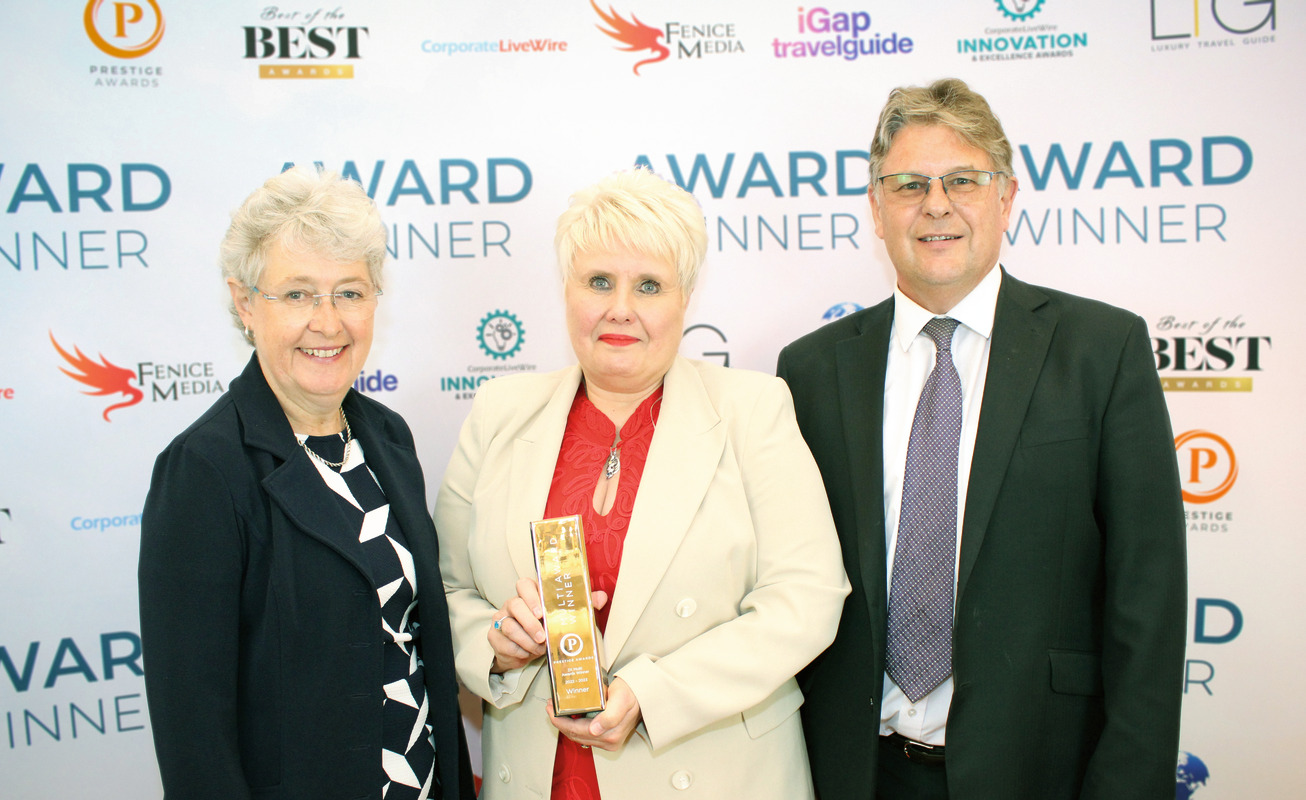
Of course, finding all these elements when you visit a care home for the first time is always difficult, so one thing we do at Sambrook House is show people our shelf of independent awards, which is a great feed into my conclusion this month. I am delighted to report that Sambrook House has won, for the second time, the ‘Prestige Award’ for ‘Boutique Care Home of the Year’, and because this is the second time, we have been given a GOLD trophy! This is a wonderful endorsement of the love, care, expertise, and professionalism provided by our amazing staff – I am so proud of them all!
by Neil Robson, Director
Sambrook House Residential Care Home
Pictured:
Left – Sue Robson (Owner), Centre – Gill Gannon (Care Manager), Right – Neil Robson (Owner)