No Need to be a Bigwig to Look and Feel Good!
 nova
12 September 2015
The word wig is short for periwig, derived from the French word for a wig, perruque.
A few hundred years ago fashion conscious courtiers tried to outdo one another with the size of their wigs. Even to this day, a person who is of particular importance, or thinks they are, is called a bigwig!
Wigs fell into disuse for a thousand years until they were revived in the 16th century as a means of improving one’s personal appearance. The unhygienic conditions of the time meant that hair attracted head lice, a problem that could be much reduced if natural hair was shaved and replaced with a more easily deloused artificial hairpiece. Fur hoods were also used for a similar reason.
17th century wigs were extraordinarily elaborate, covering the back and shoulders and flowing down the chest. Not surprisingly, they were extremely heavy and often uncomfortable to wear. Such wigs were expensive to produce. The best examples were made from natural human hair. People in debt would sell their hair to the wigmaker, and there was a macabre trade in the hair of the dead. The hair from horses and goats was often used as a cheaper alternative!
From the late 17th to early 19th century, European army officers wore wigs more suited to the drawing rooms of Europe than the battlefield. The late 17th century saw officers wearing full natural-coloured wigs, switching to shorter powdered styles with pigtails in the early 18th century.
The rank and file of the infantry was not allowed such luxury. Instead of wigs, the men were allowed to grow their hair long. Tallow or other fat was used to grease the hair, which was then fashioned into pigtails and tied back into the scalp hair. It was then liberally dusted with powdered chalk to give the impression of a powdered wig.
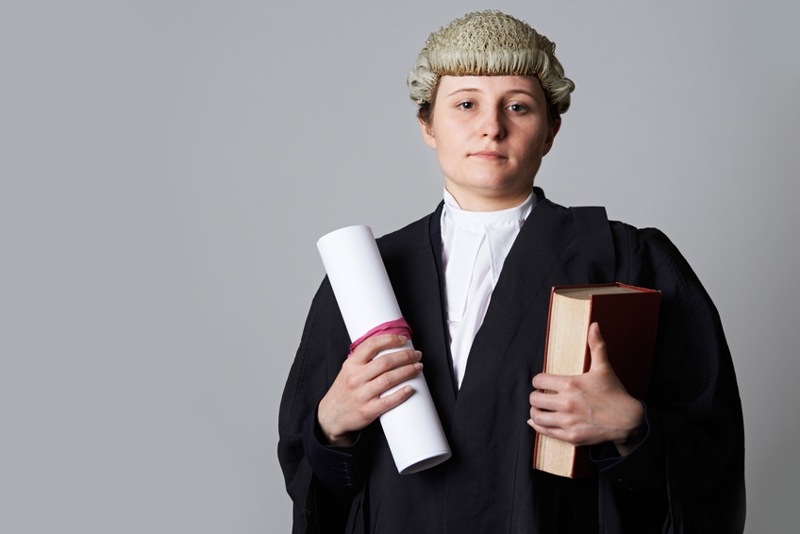
Initially, judges didn’t allow young advocates to plead their case wearing a wig but nowadays it is a signal of junior status that a young barrister will wear a bright new wig, to wear a well-worn yellowing or greying wig would look absurd. Barristers wear tie-wigs, which cover half the head, and judges wear smaller bob-wigs. On ceremonial occasions members of the House of Lords wear a floppy, shoulder-length spaniel wig which blows in the wind!
The dress code for barristers is laid down by the judges, a barrister improperly dressed will not be seen by a judge, and most importantly the judge will declare “I cannot hear you”, no matter how loudly they are talking!
Barristers’ horsehair wigs are hot in the summer and if the barrister has not got a good head of hair they can be itchy too! During the last 10 years or so there have been lots of reforms aimed at getting rid of the courtroom wig, but as Lord Donaldson aptly put it – “There is no urgent need to go discarding something which has been out of date for at least a century!”
Legendary crooner Tony Bennett, now 89, says his long-time alleged wig is his own hair. “My hair is my own, despite the fact that it looks phony. I just purposely shampoo and style it to look like a hairpiece!”
As the summer sun starts to fade and the autumn winds cause havoc with the judiciary’s spaniel wigs, why not think about making an appointment with one of the Head Quarters team? We don’t stand on ceremony and we are happy to be judged by our clients no matter how we are dressed! So please call in for your usual service or even for an impromptu wash and blow dry, our shampoo and style will give you that fresh natural look and unlike what goes on in the courtroom, we won’t make a drama out of a crisis. All clients will be seen even without an appointment! •