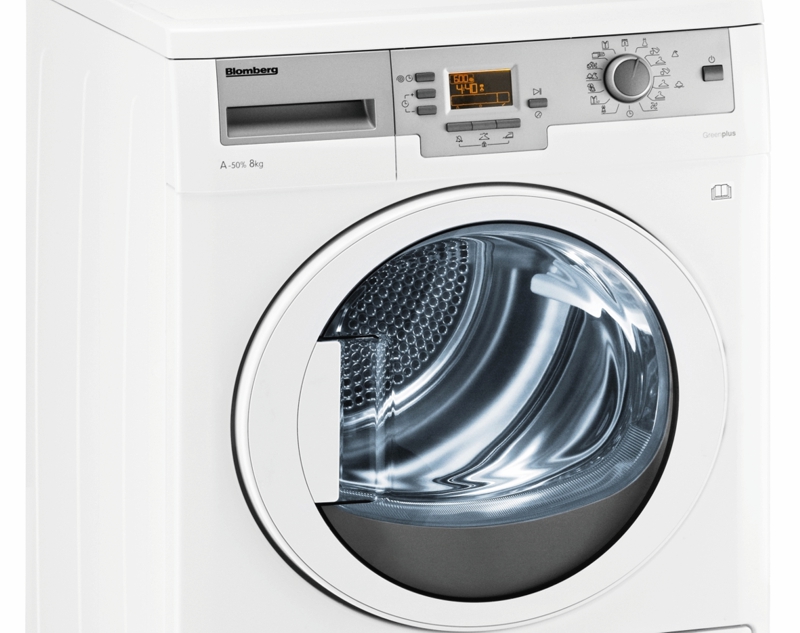
If you put your wet washing outside during the cold weather we’ve experienced over the last few months the chances are that it would turn into blocks of ice. Putting your washing on the radiators can leave your home humid and your washing rock dry. The obvious appliance to dry your clothes is a tumble dryer, and they have become more efficient to use in recent years.
Vented Dryers
There are two main types of dryer. A vented dryer will heat your washing and pass the humid air down a hose to vent out of a window or through a vent tube. This gets rid of the humid air outside. It is a simple and easy solution but does limit how efficient the drying process can be. Vented dryers are cheaper to buy than more efficient condenser dryers, but can be more expensive to run. They need to be positioned near an outside wall or window. We sell long hoses if you need to reach a bit further.
Condenser Dryers
Condenser dryers take the warm damp air from your washing and pass it over a condensing unit to remove the water. This is then collected in a tank, or can be piped off to a drain. The warm dried air can then be reused to heat the clothes again. This is more efficient because the dryer is not heating cold air all the time. There is a little bit more maintenance to do for a condenser dryer, and the extra parts mean that it costs a bit more to buy initially. Condenser dryers can be used in any room as the water is not vented out but condensed and trapped in the tank. Condenser dryers with heat pumps actively cool the condensing unit so that the water condenses quicker and the warm air remains hotter; these are more efficient than regular condenser dryers.
Energy Efficiency
A typical dryer will have an energy rating of C. To dry about 160 7kg loads over a year would cost you just over £100. By opting for a B energy rated dryer you would reduce this by a third to about £70. An A energy rated dryer could more than halve the cost to around £30-£50.
You could also choose to buy a sensor dryer which detects the amount of water content in your clothes and automatically stops when they are dry or slightly damp, ready to iron. You would not be wasting electricity by over-drying your clothes.
Top Tips
The running costs of your tumble dryer will largely be determined by its energy rating, but there are some extra tips to reduce costs further.
- To keep your tumble dryer working efficiently you will need to carry out a few regular tasks. You should look to keep the lint filter free from fluff by cleaning it on every use. If you have a condenser dryer you will need to keep the heat exchange unit clean too. Vented dryers need to have the vent hose kept clear from lint to keep the air flow high and prevent the appliance from overheating.
- Use your washing machine to spin as much water as possible out of the clothes before drying.
- Untangle your clothes and try to use your tumble dryer to maximum capacity but without overloading.
Whilst dryers will never match the energy efficiency, or quietness, of drying on a clothes line, they are capable of drying a full load of washing within two hours for less than 30p.
At Tylers we sell tumble dryers with load capacities of 6kg to 9kg. Prices start at £150 for vented dryers and £200 for condenser dryers. •