With only a few weeks to go until Easter, we should hopefully soon be feeling the start of a new season and all that it brings.
The change in daylight intensity and the flowers and blossoms appearing in our gardens and surrounding countryside reintroduces a familiar and invigorating colour palette. It’s goodbye to the cosy greys, burgundies, golds and dark greens of winter and hello to the fresh yellows, greens, lilacs, and pale pinks that herald the arrival of spring and Easter.
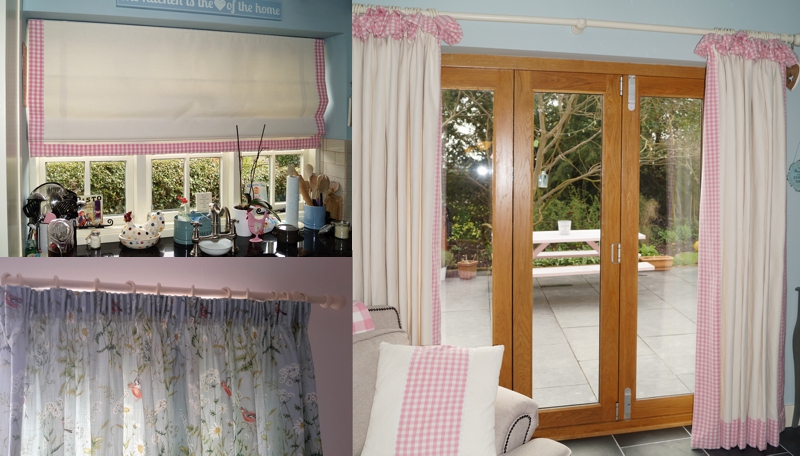
A couple of pairs of curtains I made recently embody this time of year. This first pair gave the bedroom a sense that the garden had come inside. The printed cotton fabric with a design of finches, grasses and flowers created an invigorating, uplifting vibe.
The second pair would be perfect as a backdrop for an Easter-themed photoshoot. All that’s missing is a basket full of pastel coloured painted eggs and a day-old yellow fluffy chick or two!
The curtains have baby pink gingham deep borders attached on all sides and a flop-over frill at their heading. They were interlined too so feel and look full-bodied and sumptuous. The curtain fabrics chosen were crisp cotton/linen mixes – always lovely to work with, and when Roman blinds and cushions were made to match, the overall effect was just so pretty and fresh.
Borders
Adding borders to the bottoms, tops or side edges of curtains gives them a sense of drama. It can be a way of introducing a controlled small amount of a bold fabric or colour that if used alone would be overwhelming. It can also be a useful way to lengthen or widen an old pair of curtains that are to be hung at a new window. The borders can be deep or narrow depending on the effect you are trying to create and can help to manipulate the proportions of a window too. Deep borders at the bottom of curtains can be used to accentuate deep skirting boards and narrower borders added to leading edges of a pair of curtains can give an illusion of height to an otherwise slightly stumpy window.
There are few rules when adding borders to Roman blinds. They can go at the sides, top, bottom or all the way around. They are usually between 2.5cm and 10cm deep, although really big blinds may be able to tolerate slightly deeper borders. Again they can help to balance and enhance the proportions of a window, define the architrave around it or bring contrasting colours and textures into a scheme.
Rachel Harris