With the mix of sunshine and rain we’ve had over the British summer we hope that you’ve had some success in growing fruit and vegetables in your garden or allotment.
It is good to share excess produce with family, friends and neighbours, instead of having to eat rhubarb constantly for the next month. Even if your tomatoes haven’t grown but your beans have, you will probably need some storage space to keep the overabundance this harvest. Freezing is the obvious choice for your delicious produce so that you can enjoy it during the autumn and winter.
The secret to freezing fresh food is to freeze it quickly. Large ice crystals form when food is frozen slowly, which deteriorates the quality of your food. Many freezers feature a fast freeze button which should be used in advance of freezing fresh food to reduce the temperature of the freezer. Once your food has been frozen (usually within 24 hours) the fast freeze button can be turned off. A specific drawer may also be marked for fast freeze. This may not be the largest drawer, but it is the one that will become the coldest the quickest.
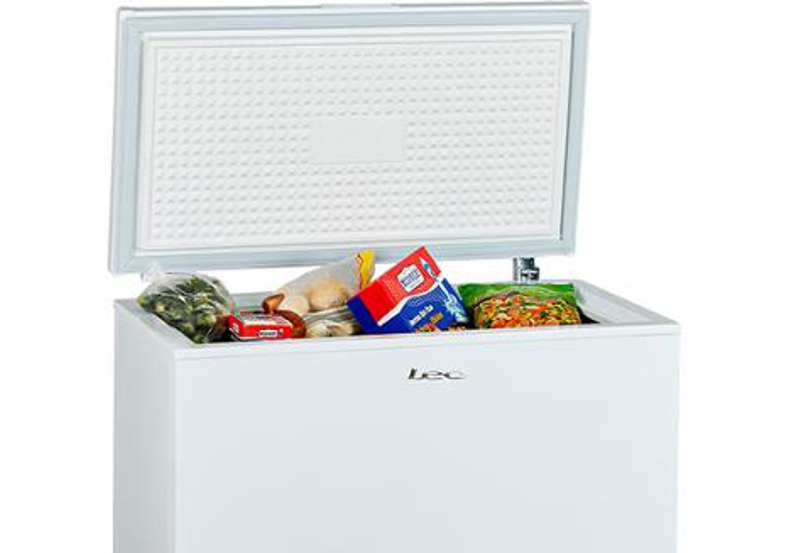
Modern upright freezers offer a variety of drawer sizes, often in clear plastic, for your convenience in storing large items such as whole turkeys. Chest freezers have a large storage space but it’s harder for you to keep different food types separated. Chest freezers range from 60 litres up to 400 litres. Under counter freezers are more convenient to access and are available in three widths, 50cm, 55cm and 60cm. Only the 60cm wide version is available in frost-free. Capacities range from 60 to 100 litres. Tall freezers start at 140cm and go up to 191cm high, offering capacities from 140 litres to 360 litres. Most tall freezers are frost-free. Frost-free freezers prevent ice from building up inside the compartment by circulating air and removing humidity so you shouldn’t ever need to manually defrost. This keeps the freezer working efficiently. You should still remove any dust and dirt on the condenser coils at the rear of your freezer once or twice a year. Keeping these clean helps to release heat so that the compressor doesn’t have to work so hard. At the same time you should check the door seals are intact and making good contact.
Losing the contents of your freezer in a power cut can cost hundreds of pounds. Several manufacturers now fit temperature alarms for when the internal temperature rises, and door alarms if the door is left open for too long. If there is a power cut you should try to keep your freezer door shut. The amount and quality of insulation now used means that some freezers will keep food frozen for up to 60 hours. Another risk of thawing food is when you use your freezer in a garage during the winter. Freezers should be set at -18°C. When the ambient temperature drops below 0°C the compressor can stop working, the thermostat can switch off the freezer and the contents start to thaw. The hidden health risk is that you don’t notice the food has started to thaw and then it gets re-frozen as the ambient temperature rises. Although this is not often a problem for the UK, manufacturers such as Beko and Zanussi guarantee that their freezers will work in sub-zero temperatures and are suitable for garages.
Here, at Tylers, we have upright and chest freezers in stock, ready to go. We deliver and can recycle your old freezer at an extra cost. •
September 2016