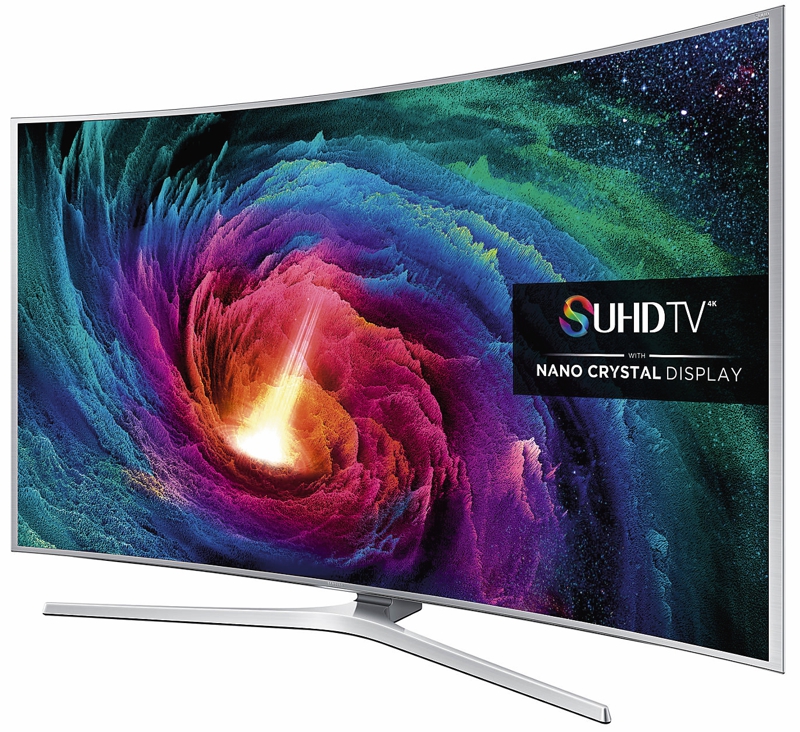
Samsung has just released its latest line of televisions. Out goes the J series and in comes the K series. These are just in time to catch the major sporting events of the summer.
At the entry level there are still two main choices for you – whether to stick with full high definition (1080p), or scale up to the ultra high definition (UHD).
An additional factor now is whether you prefer traditional flat screens or a new curved screen. Some people feel curved TVs offer a more immersive experience, greater depth and better contrast.
The new range
- 5500 series – flat 1080p models
- 6300 series – curved 1080p models
- 6400 series – flat UHD models
- 6500 series – curved UHD models
Colour science – when white light is not white
TVs need to produce light for you to see. Modern TVs use LEDs which produce a blue light. You may have noticed this if you have replaced your tungsten light bulbs for LED ones which appear bluer and cooler in colour. To make the LED light more white, it is coated in a yellow phosphor. The blue and yellow combine to create what appears to be white light, but isn’t since it is lacking in red and green.
There is an alternative to using the yellow phosphor to create the white light. It is called quantum dot (also branded as Crystal Colour or Nano Crystal technology).
By shining the blue LED light on to tiny phosphorescent crystals, the crystals will glow and emit different colours depending on their size. These quantum dots can be made the right size to create red and green light. Combining the red and green with the blue LED light makes a more balanced white light. This means you will get to see pictures containing much more natural, balanced colours with far richer reds and greens than you’re used to seeing from the more limited standard TV. It will also produce more light than the yellow phosphor method, so your TV will have a brighter display and greater contrast between the brightest whites and darkest blacks. The number of colours the new TVs can display has increased from 16 million colours to 1 billion colours.
By carefully selecting the most intense red for the red pixels, and the same for green and blue, new TVs have better colour accuracy, a wider colour gamut, brighter overall images and higher dynamic range (brighter brights and darker darks). Samsung’s top line UHD TVs have quantum dot technology, and feature Ultra Black technology to reduce light reflections.
One cautionary note is that Samsung have done away with Scart sockets on all their new TVs. To connect a DVD player you will have to use a different cable or an adapter.
Alternatively you could upgrade to a Blu-ray player. Samsung has also released its first Ultra HD Blu-ray player, the UBD-K8500, retailing around £429.
We stock a range of Samsung TVs in Tylers. We are happy to demonstrate the latest features in store for you to see. •