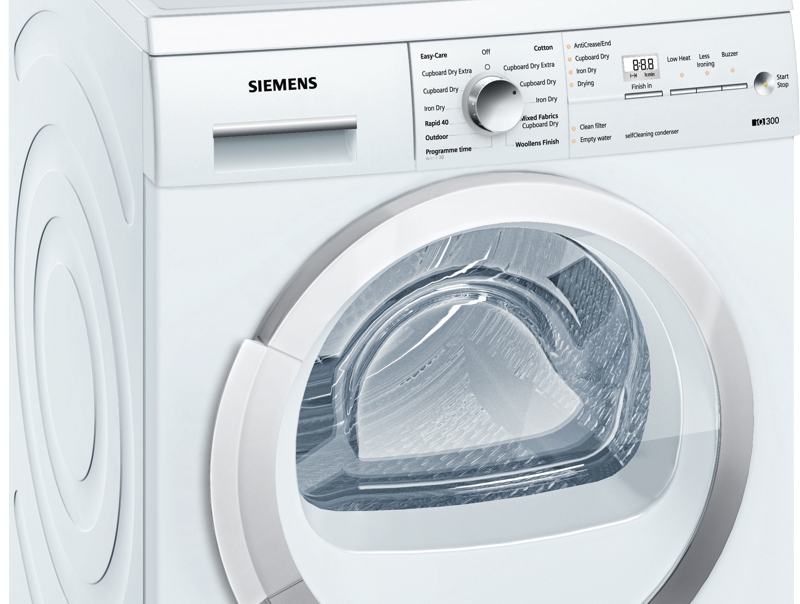
Getting your clothes washed and dried over the winter is a major chore. It can be made much easier by using a tumble dryer.
There are two main types of tumble dryer, vented and condenser.
But it doesn’t stop there!
Vented dryers are the most basic. Warm air passes over your damp clothes, collecting moisture on the way. It is vented down a hose out of your window, or through a venting hole. Since the hot air is blown out of the window it is not the most efficient, with vented dryers rarely being rated above a C class energy rating.
Condenser dryers work by taking the warm damp air and passing it over a condensing unit to draw the moisture out and collect it in a reservoir. The warm air is then recycled back over your clothes. You will have more maintenance on a condenser dryer. As well as cleaning the lint filter every time you will have to empty the water reservoir every couple of loads. You will need to run the condensing unit under the tap every couple of months to remove any lint that has been caught on it. Condenser dryers can be used in any room and can achieve higher energy ratings due to recycling the warm air.
Even better…
Even more efficient are heat pump dryers, which are very similar to condensers. The heat pump has a compressor, much like a fridge, that generates warmer gases and cooler gases. The warmer gas is used to warm the clothes to evaporate the moisture, whereas the cooler gases help to condense the water from the warm damp air. Heat pump dryers use substantially less electricity than conventional condenser dryers. They also use lower temperatures so are kinder on your clothes, but take a little bit longer.
Sensors make sense
Both vented and condenser dryers can have sensors that measure the moisture in the drum, and stop when the right dryness level has been reached. For example, cupboard dry leaves clothes dry enough to store straightaway. Extra dry is a longer programme for multi-layered or thick fabrics such as bed sheets and towelling. Iron dry leaves the clothes very slightly damp which makes them much easier to iron. Stopping the drying cycle at the right time saves you money by using less electricity and preventing heat damage to your clothes. No more guesswork as to how long to set the timer for.
Try to match the load size of your dryer to the size of your washer. It is more efficient to dry one large load than two smaller loads. Using the highest spin setting on your washing cycle will remove the most water before drying.
Set a sensor dryer to the iron dry setting first, then remove your clothes that need ironing, before leaving the rest of the clothes on a cupboard dry cycle. Remember to clean the filters regularly.
Come to Tylers in St Mary’s Street, Newport to see the vented, condenser and heat pump dryers we have, most from stock. We deliver next day and for an extra charge can dispose of your old appliance. •