Despite the title, I’ve decided that I’m not going to write a tribute to Shakira’s famous tune.
Alternatively, and following on from the (now fully recovered) groin injury I had last month, I thought that I would highlight the importance of the hips when it comes to low back injury causes and prevention.
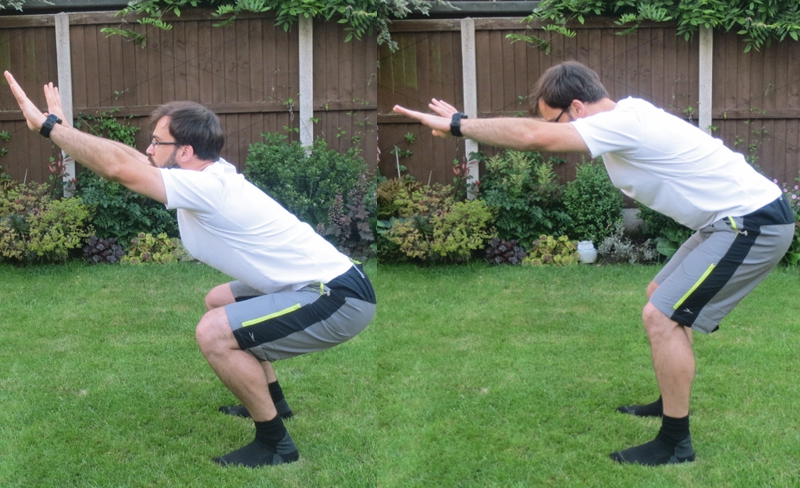
One of the first things I assess when I see clients with long-term, recurrent and persistent back problems is their ability to perform a body weight squat and forward bend. Despite common belief, this isn’t to test tightness of the hamstrings or flexibility of the spine. Instead, I’m particularly looking at the mobility and stability of certain parts of the body as they progress through the movements.
Our bodies are amazing feats of nature. We are born with an innate ability to move in complex neuro-muscular sequences without even thinking about it. If you watch a toddler playing or picking things up, they will often squat or bend over for hours without any movement restriction and with impeccable form. No one has taught them that – it’s an inherent and fundamental movement pattern. Unfortunately, as we go through life, these movements can become corrupted by factors such as posture, injury, and a general lack of movement.
To move well, some areas of the body need stability and others need mobility. The feet, knees, low back and shoulder blades for example need to stay stable as a base for the more mobile joints including the shoulders, thoracic spine, hips and ankles. If one or more of these areas becomes too mobile, not mobile enough, or loses stability, then we can develop poor and dysfunctional motor movement patterns to compensate and sooner or later, that’s what leads to injury and pain.
The hips, in particular, are a common area to lose mobility, largely due to the amount of time we spend sitting nowadays. When we sit, our hips are in a shortened, flexed position, our spinal stabilisers are mostly inactive, and our gluteal muscles are switched off. All of these factors can combine to cause inhibition (weakness) of the gluteals (massively important in hip and pelvic coordination), restricted hip mobility (massively important in squatting or bending), and low back instability (massively important for injury prevention). The end result is a loss of the ability to sit back or hinge through the hips when squatting or bending, causing increased tension in areas such as the low back and hamstrings. You can probably guess the rest.
It’s important to get treatment that not only addresses the symptoms you experience but also attempts to get to the bottom of why you experience them in the first place. Chiropractic does this, and is essentially all about improving and maintaining your natural movement and mobility. After all: Good spinal function is essential for movement; Good movement is essential for health; Chiropractic helps to maintain good spinal function.
See what chiropractic can do for you. I am available in Newport on Tuesdays, Thursdays and Saturdays and now also in Stafford on Mondays, Wednesdays and Fridays.
I look forward to seeing you.
Chris Mallett
July 2016